
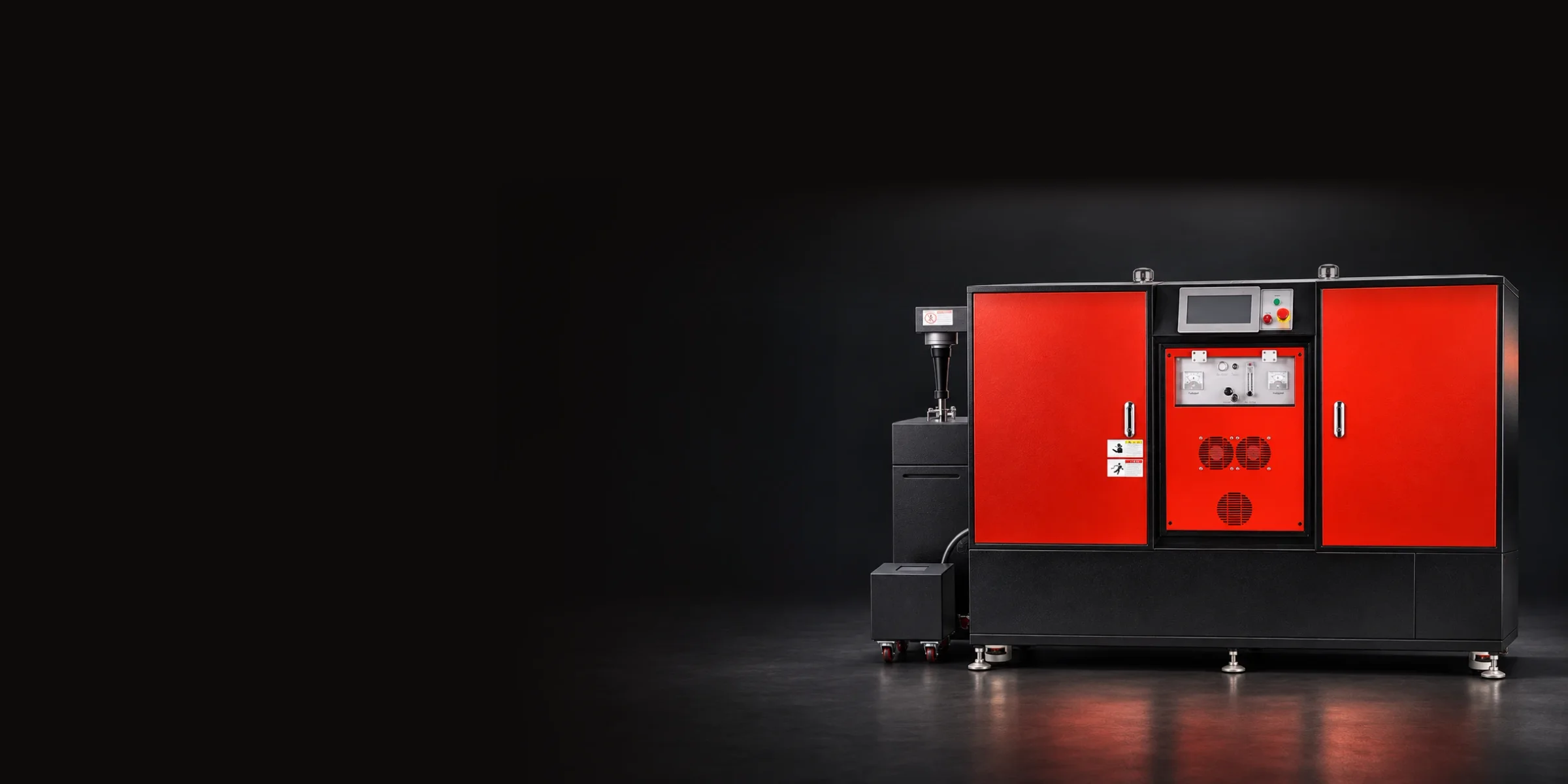
SELTEC CRM Series
Spent coolant
is still a resource.
Water-miscible coolant that has gone rancid or dirty usually ends up as waste. The CRM Series cleans it inside your plant and sends it back to production, so money you spent on disposal goes back into usable coolant.
- CleanSeparates out contaminants
- RecoverKeeps usable coolant in the loop
- ReuseBack to your machines
Spent coolant costs more than the disposal bill.
Contaminated coolant affects output, part quality, costs and the environment. And when a sump is dumped, coolant that could still be used goes out with it.
Less stable machining
Contamination changes how the coolant performs. Results start to vary and surface finish problems increase.
Wear on machines and tools
Sludge builds up, machines wear faster and tools need replacing sooner.
Costs keep climbing
Fresh coolant, disposal, transport and storage all add up month after month.
Usable fluid thrown away
Coolant that still has life in it is disposed of along with the rest, adding to the environmental load.
CRM does not throw coolant away.
It removes what has to go.
Machining and the shop environment introduce a range of contaminants that degrade coolant performance. CRM separates them out and brings the coolant back to a condition where it can be used again.
Solids
Metal chips, fines and grinding swarf
Tramp oil
Way lube, hydraulic oil and other oils leaking into the coolant
Sludge
Machining residue and contaminants settled at the bottom of the sump
Other debris
Dust and foreign matter from the shop floor
Contaminated coolant
- Mixed with contaminants
- Reduced performance
- Shorter service life
Managed coolant
- Contaminants removed
- Condition restored
- Ready to reuse
From dirty coolant back to production
A simplified animation of what happens inside the CRM, focusing on the principle.
- 1
Collection
Used coolant containing chips, sludge and tramp oil is collected from the machine sumps and transferred to the CRM.
- 2
CRM treatment
Settling sludge and floating tramp oil are separated, and usable coolant is recovered through the separation stage.
- 3
Condition check
The treated coolant is checked to confirm it is fit for reuse.
- 4
Storage
Treated coolant is stored, ready to be sent to the SMP.
- 5
Concentration control in the SMP
In the SMP, recycled coolant joins fresh concentrate in the concentrate line, then mixes with water to the set concentration.
- 6
Supply to machines
Coolant at the right concentration is piped to CNC machines and other machine tools.
Stop buying, using and dumping.
Keep your coolant in circulation.
Conventional
- Buy fresh coolant
- Use
- Contaminate
- Dispose
- Ship to waste contractor
- Buy again
With CRM
- Use
- CRM treatment
- Condition check
- Storage
- SMP concentration control
- Reuse
| Item | Conventional | With CRM |
|---|---|---|
| Coolant flow | Used once, then disposed of | Recovered and reused |
| Fresh coolant purchases | Replace everything you dump | Reduced by what you recover |
| Waste coolant disposal | Contractor every time | Less coolant sent for disposal |
| Maintenance work | Repeated changes and sump cleaning | Longer intervals between changes |
| Environmental results | Waste volume unchanged | Reduced waste recorded for ESG reporting |
Four models for different plant conditions
We look at your treatment volume, available floor space and operating conditions, then recommend the model that fits.
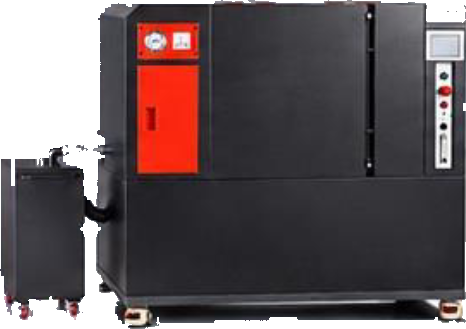
Compact
CRM-MCT10
A compact recycling unit that fits into a wide range of machining environments.
Help Me Choose a Model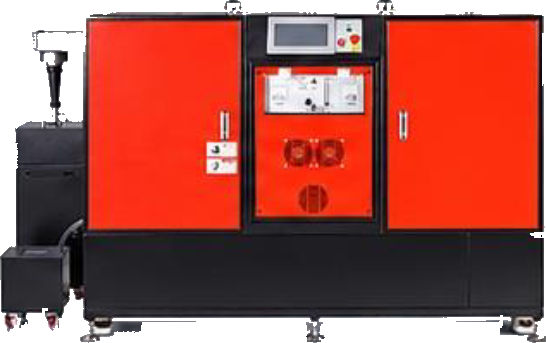
Standard
CRM-SE30
Our standard recycling system, built for steady performance and simple operation.
Help Me Choose a Model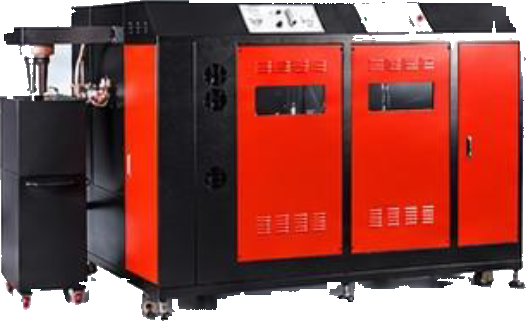
Mid to large
CRM-0250
A high-performance system sized for mid-size and large production lines.
Help Me Choose a Model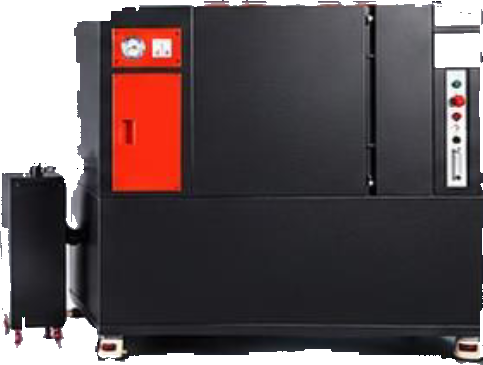
Large scale
CRM-0270
A high-capacity system for large production plants.
Help Me Choose a Model
Capacity and specifications are configured for each site. We will send a detailed specification sheet when we discuss your project.
Lower purchasing, disposal and handling costs together
CRM recovers usable coolant and puts it back to work, so you buy less fresh coolant and dispose of less waste.
What you pay today
- Fresh coolantCoolant bought again and again
- Waste coolant disposalDisposal and treatment of used coolant
- Transport and storageMoving and holding waste coolant
- Maintenance laborCoolant changes and sump cleaning
What changes with CRM
- Fresh coolant purchasesLower, because recovered coolant is reused
- Waste volumeLess waste, so lower disposal costs
- Disposal and transportFall in line with waste volume
- CRM running costsElectricity and other operating costs
Annual net savings=Purchasing savings+Disposal savings−CRM running costs
Estimate your annual net savings.
Enter figures from your plant to estimate net savings with CRM. The values below are examples, so replace them with your own.
How it is calculated: the reuse rate and waste reduction follow your inputs, and the monthly operating cost is subtracted. This is a rough estimate. An actual payback period needs to be calculated from site data.
Featured installations
Each system was configured for the site with auxiliary tanks, transfer pumps and filters.
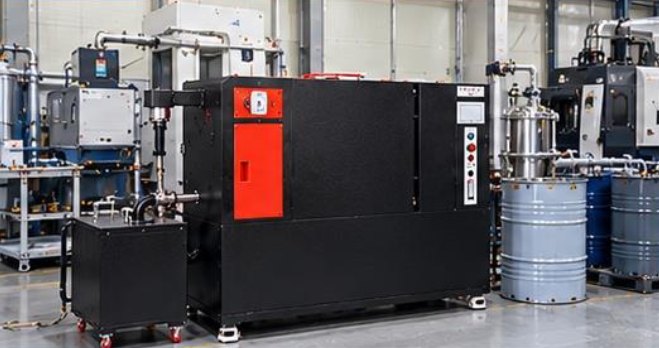
Case 1
Automotive parts plant in Korea
- Site
- Automotive parts machining
- Purpose
- Treat and reuse coolant to reduce waste volume
- Configuration
- CRM with auxiliary tank
- Result
- Stable treatment performance, in continuous use
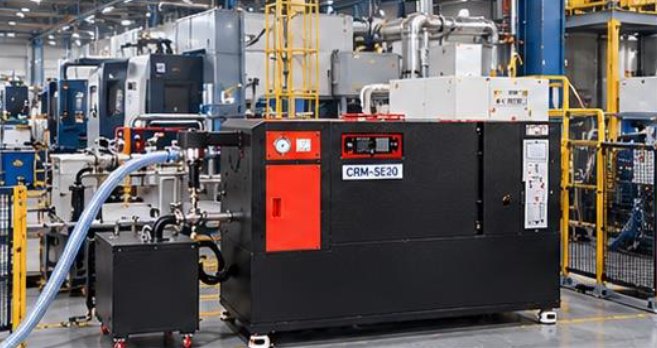
Case 2
Large production plant overseas
- Site
- Large metalworking plant outside Korea
- Purpose
- Treat and reuse large volumes of coolant
- Configuration
- CRM, transfer pump and auxiliary tank
- Result
- Stable continuous operation with output maintained
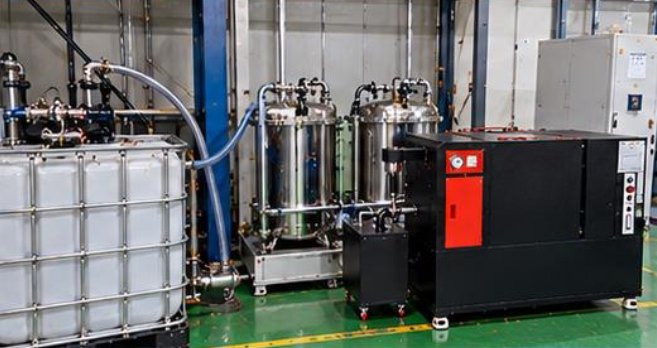
Case 3
Integrated tank, filter and CRM
- Site
- Die, mold and precision parts machining
- Purpose
- Longer coolant use with consistent quality
- Configuration
- Tank, filter and CRM as one system
- Result
- Longer coolant life and less waste
CRM in operation
CRM Series systems are cleaning and reusing coolant in automotive parts, die and mold, and precision parts machining.
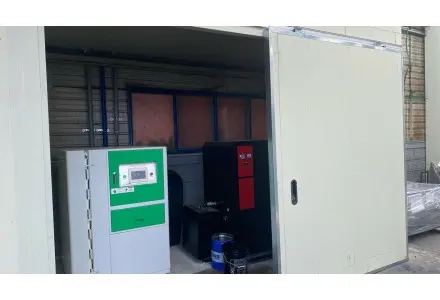
Company H, Hwaseong
CRM-MC10T
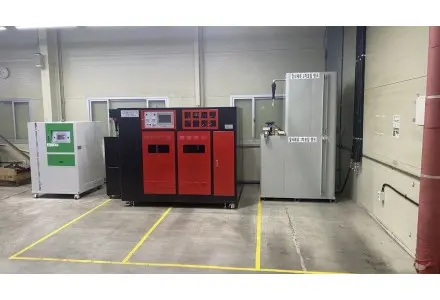
Company D, Gyeongsan
CRM-0270
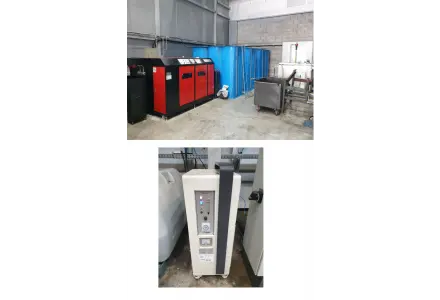
Company N, Seosan
CRM-0270
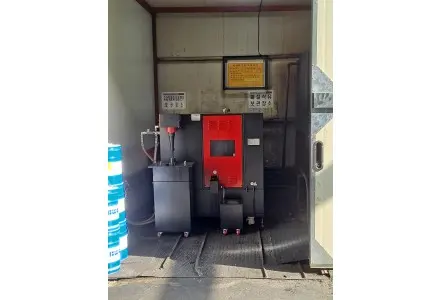
Company W, Changwon
CRM-SE30
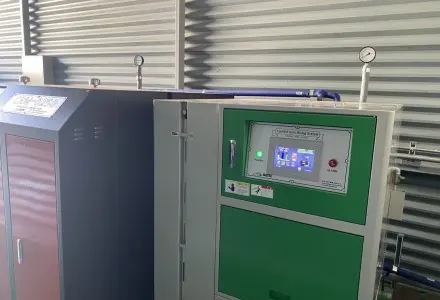
Company D, Dangjin
CRM-0250
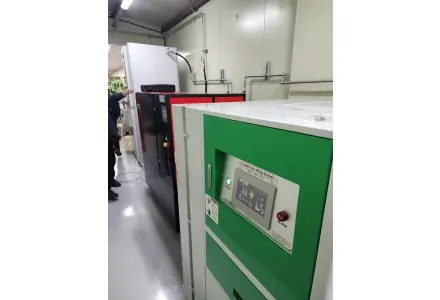
Company D, Ansan
CRM-MC10T
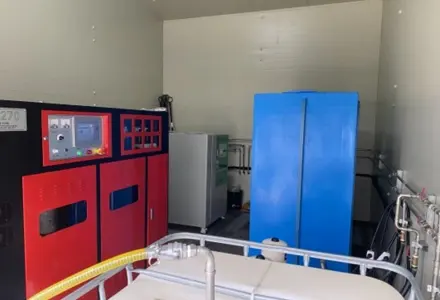
Company S, Asan
CRM-0270
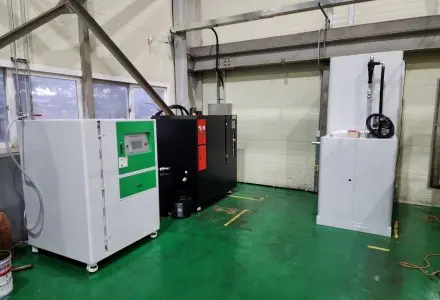
Company D, Siheung
CRM-MC10T
Frequently asked questions
Which coolants can CRM treat?
CRM is designed for water-miscible coolants. Tell us the product name and condition of the coolant you use, and we will check whether it can be treated before anything else.
Can coolant that has already gone rancid be reused?
That is exactly what CRM is for: separating out contaminants and sanitizing the coolant so it can be used again. How much can be recovered depends on how contaminated it is, so we assess the coolant at your site first.
How do I choose a model?
It depends on your daily treatment volume, floor space and how you want to run the system. Smaller sites usually start with the CRM-MCT10, standard lines with the CRM-SE30, and mid-size to large lines with the CRM-0250 or CRM-0270.
How much can we save?
You buy less fresh coolant and pay less for disposal, transport and handling, while the unit adds its own running costs. We calculate the actual net savings and payback period from your site data.
What does installation involve?
You need floor space for the unit, a power supply and a way to transfer coolant, either by piping or another method. After reviewing your layout, we propose what else is needed, such as auxiliary tanks or transfer pumps.
How are inspection and service handled?
SELTEC handles inspection, consumables and repairs. Choose Service request on the contact form and our team will get back to you. For sites outside Korea, support arrangements are agreed when the project is planned.
Do you supply CRM systems outside Korea?
Yes. CRM systems are already running at plants outside Korea. Send us your location and requirements, and we will discuss delivery, installation and support for your region.
Start by telling us how much coolant you dispose of.
Share your monthly coolant use and waste volume, number of machines and installation site. One of our engineers will review it and recommend a configuration with estimated savings.
+82 31 366 3817Monday to Friday, 9:00 to 18:00 (KST)